 EGRFC Playbook
 Defence
Table of Contents
Lineout defence is harder than attack — you react without knowing the plan. Success depends on everyone working together with clear roles.
Static vs Dynamic defences
Static
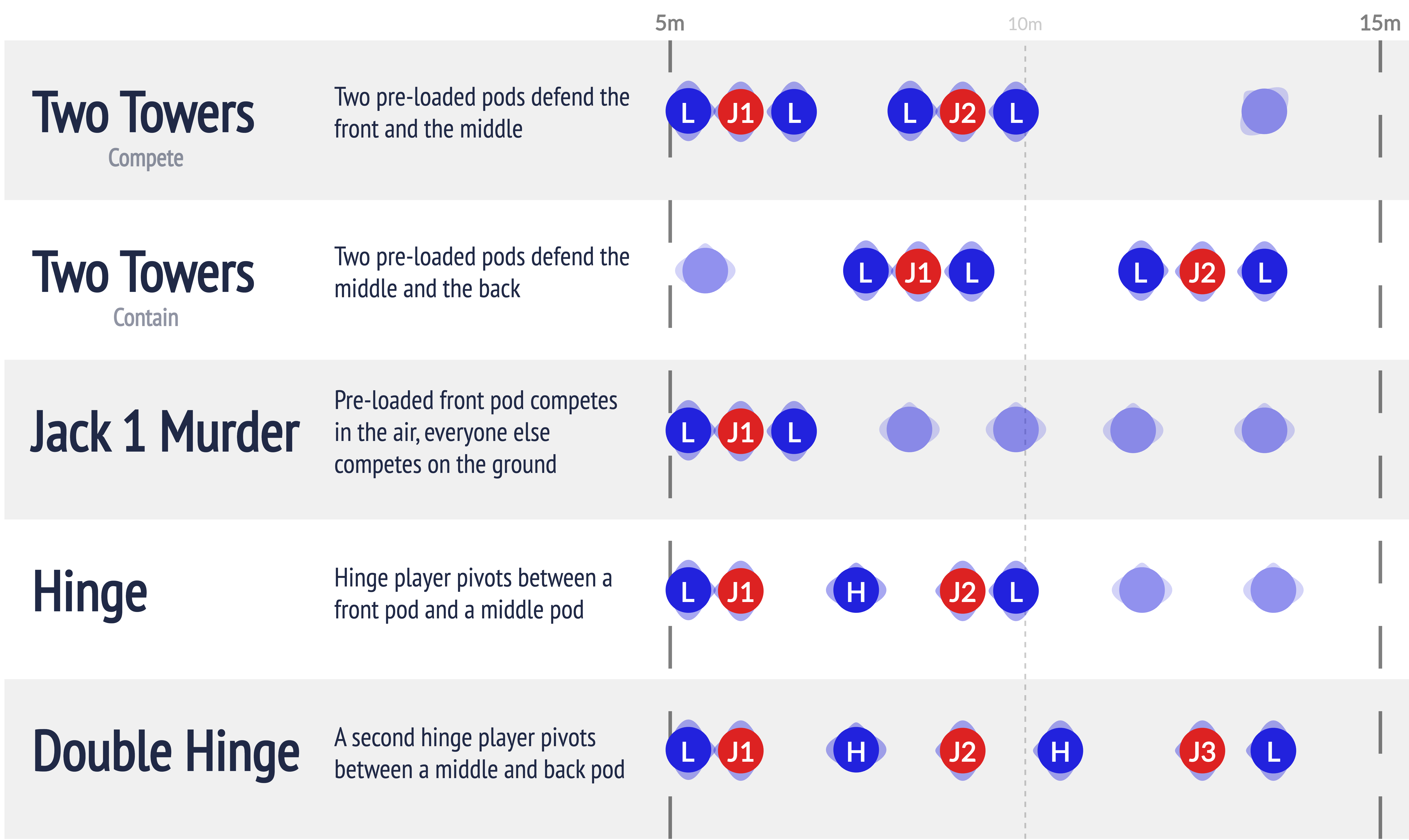
In recent years, we’ve mainly used 3 static setups:
- “2 Towers”: 2 pods ready to contest
- “Jack 1 Murder”: 1 pod
- “Murder”: No pods
These are predictable and easy to counter. Opponents often use 5-man lineouts or quick throws to avoid or beat them (e.g. to the back, off the top, or with a shift drive).
Dynamic
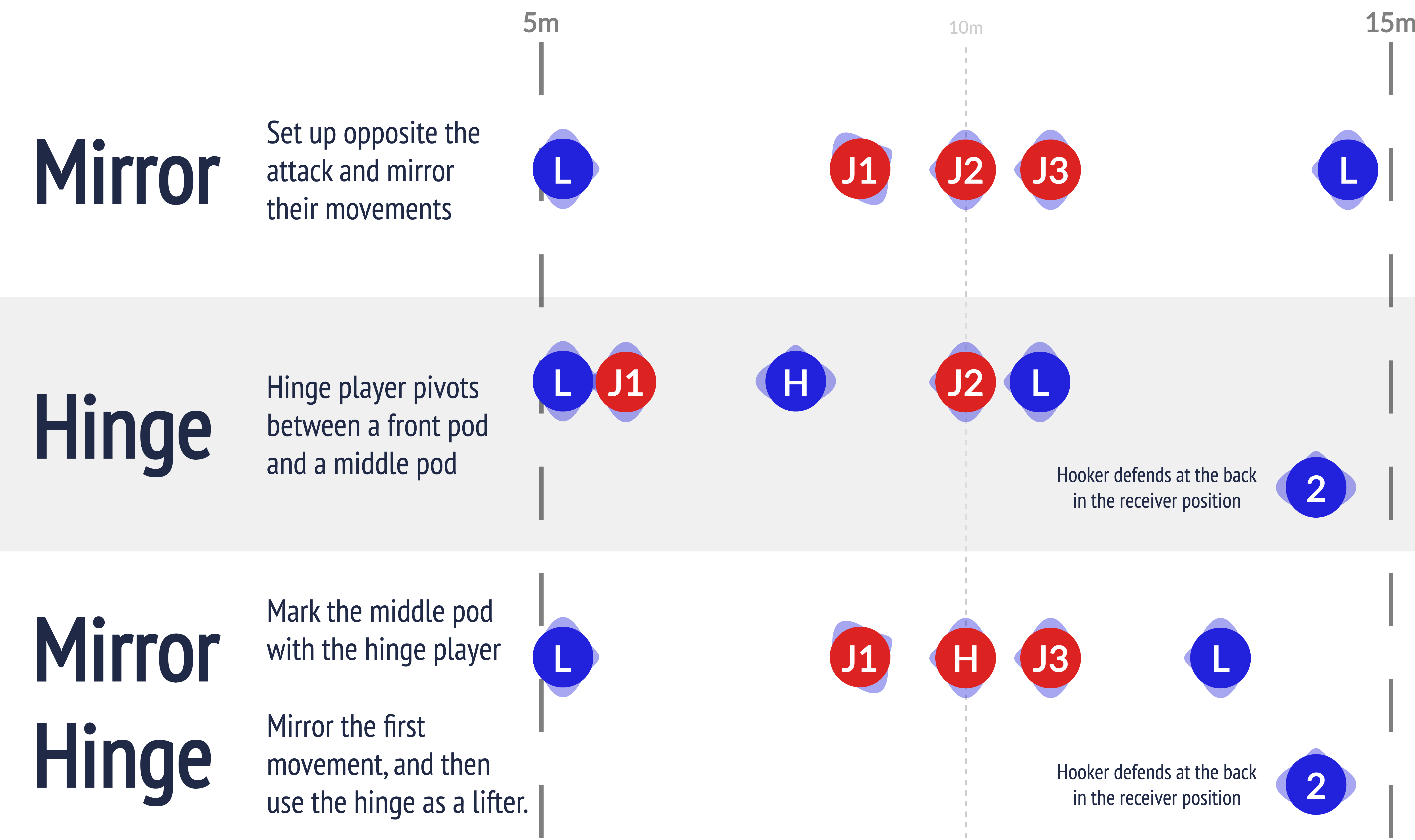
Stronger defence involves coordinated, reactive movement by multiple players. This demands training, quick decisions, and clear understanding of roles:
- “Mirror” - each player marks their opposite man, mirroring their movements in anticipation of having a jumper ready to compete in the air
- “Hinge” - jumpers mark their own area and a “hinge” player stands between them. This is the most challenging role as he must react to the opposition’s movement and commit to lifting one of the jumpers.
5-man Options
Assuming most teams will run a similar 1-3-1 formation, we can mirror them. But other options allow us to put more contest in the air at the front/middle, while being ready to put pressure on the 9-10 channel towards the back.
7-man Options
Full lineouts are less common now, largely because they give us more ways to defend. How we set up depends on whether we want to compete in the air, force the throw to the front/back, defend a maul, or pressure the 9-10 channel.